

Hair loss no longer feels like an unsolvable problem hidden behind genetics and time. Advances in dermatological science, formulation technologies, and targeted drug delivery have reshaped how people approach androgenetic alopecia. Among these innovations, Liposomal Topical Finasteride stands out as a solution that blends efficacy with a more controlled safety profile.
For years, oral finasteride dominated discussions around hair loss treatment. While effective, it raised concerns about systemic exposure and unwanted side effects. As users became more informed and selective, demand grew for alternatives that deliver results without compromising overall well-being. This demand fueled the rise of topical formulations, and liposomal technology elevated them to an entirely new level.
This guide explores why Liposomal Topical Finasteride has gained attention, how it works, and what makes it increasingly attractive for people seeking a balanced, modern approach to hair restoration. You’ll also find practical application advice, comparative insights, and answers to common questions—presented clearly, conversationally, and with a reader-first mindset.
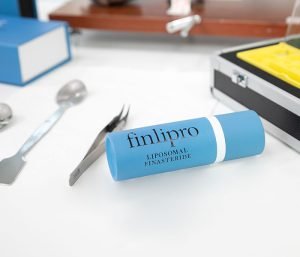
Before diving into benefits, it helps to understand what “liposomal” actually means. Liposomes are microscopic, spherical vesicles made from phospholipids—the same building blocks as human cell membranes. This structural similarity allows them to merge more easily with skin cells.
When formulators encapsulate finasteride inside liposomes, they create a protective carrier that:
Traditional topical solutions rely on simple diffusion, which often results in uneven absorption and reduced efficacy. Liposomal carriers, on the other hand, act like guided delivery vehicles, releasing finasteride precisely where hair follicles need it most.
This technology does not change what finasteride does; it changes how and where it works.
Hair loss treatments evolve alongside user expectations. Today’s users want results, but they also value transparency, customization, and long-term safety.
Topical finasteride addresses several modern concerns at once:
When liposomal technology enters the picture, these advantages multiply. The formulation allows consistent follicular exposure while keeping systemic levels low. As a result, many users feel more confident starting and maintaining treatment.
This shift reflects a broader movement in dermatology toward localized, precision-based therapies.

One of the strongest arguments for Liposomal Topical Finasteride lies in its relationship with systemic exposure. Oral finasteride circulates throughout the body, inhibiting 5-alpha-reductase enzymes wherever they exist. While this mechanism effectively reduces dihydrotestosterone (DHT), it also explains why some users experience unwanted effects.
Topical delivery changes this dynamic.
When applied directly to the scalp, finasteride concentrates around hair follicles. Liposomal encapsulation further reinforces this localization. Instead of diffusing rapidly into circulation, the drug releases gradually at the target site.
This approach offers several practical advantages:
Users who hesitate to start oral therapy often feel more comfortable with topical alternatives because they perceive greater control over the treatment process.
Liposomes function as controlled-release systems. They shield finasteride during penetration and release it slowly once inside the scalp layers. This controlled behavior reduces peak systemic levels, which often correlate with side effects.
While individual experiences vary, many users report improved peace of mind when choosing liposomal formulations. This psychological comfort plays a real role in adherence, consistency, and overall satisfaction with treatment.
Even the most advanced formulation delivers results only when users apply it correctly. Liposomal Topical Finasteride rewards consistency, technique, and a basic understanding of scalp care.
A clean scalp improves absorption. Oil buildup, styling products, and environmental debris can interfere with penetration.
Before application:
This preparation creates a clear pathway for liposomes to interact with skin cells.
Small details matter when applying topical treatments.
Follow these best practices:
Rubbing aggressively does not improve absorption and may irritate the scalp.
Consistency drives results. Most users apply topical finasteride once daily, often in the evening.
Evening application offers advantages:
Consistency over months—not days—produces visible improvement.
Not all topical finasteride solutions perform equally. Formulation quality shapes both results and user experience.
| Feature | Traditional Topical Finasteride | Liposomal Topical Finasteride |
|---|---|---|
| Absorption | Variable, surface-level | Enhanced follicular penetration |
| Drug Stability | Moderate | High due to encapsulation |
| Systemic Exposure | Potentially higher | Reduced and controlled |
| Scalp Tolerance | Can cause irritation | Often better tolerated |
| Consistency of Results | Less predictable | More uniform delivery |
This comparison helps explain why liposomal options increasingly dominate conversations among informed users and practitioners.
Understanding why finasteride works clarifies why delivery method matters so much.
DHT binds to androgen receptors in hair follicles, shortening the growth phase and miniaturizing hairs over time. Finasteride blocks the enzyme responsible for converting testosterone into DHT.
Localized inhibition matters because:
Liposomal delivery supports this precision by keeping the active ingredient focused where DHT causes the most damage.
Not every treatment suits every individual. However, certain profiles align particularly well with Liposomal Topical Finasteride.
This option often appeals to:
Topical delivery integrates well into multi-step regimens without significantly increasing burden.
Hair loss treatment often spans years. Sustainability matters more than rapid, short-term gains.
Users who value:
often gravitate toward liposomal formulations as a stable foundation.
Combination therapy frequently delivers superior results. Liposomal finasteride pairs well with other topical or procedural approaches.
Common combinations include:
When combining treatments, spacing applications appropriately prevents interference and irritation.
Hair growth follows biological timelines. No formulation bypasses this reality.
Users often notice:
Understanding this timeline reduces frustration and prevents premature discontinuation.
Liposomal delivery supports this process by maintaining steady follicular exposure, which aligns perfectly with hair’s slow growth cycle.
Misinformation spreads quickly in online hair loss communities. Clearing myths improves decision-making.
“Topical Finasteride Doesn’t Work”
This claim ignores formulation differences. Efficacy depends on penetration, stability, and consistency. Liposomal delivery directly addresses these variables.
“Lower Systemic Exposure Means Lower Effectiveness”
Localized concentration often matters more than circulating levels. Targeted delivery supports efficacy without unnecessary exposure.
“All Topicals Are the Same”
Formulation science matters. Liposomal systems outperform basic solutions in both absorption and tolerability.
Confidence influences outcomes more than many realize. When users trust a treatment, they use it consistently and correctly.
Liposomal Topical Finasteride offers psychological benefits by:
These intangible factors contribute meaningfully to success.
The rise of liposomal formulations reflects a broader trend toward personalized medicine.
Future directions include:
As research advances, topical therapies will likely continue moving away from one-size-fits-all solutions.
Is liposomal topical finasteride as effective as oral finasteride?
Many users achieve comparable stabilization when they apply the topical form consistently. The key difference lies in delivery, not the active ingredient itself.
How long should I use liposomal topical finasteride before judging results?
Most users evaluate progress after six to twelve months. Hair growth requires time, and early patience pays off.
Can I stop oral finasteride and switch directly to topical?
Many users transition successfully, but maintaining consistency during the switch matters. Overlapping briefly may help some individuals.
Does liposomal delivery reduce scalp irritation?
Liposomal encapsulation often improves tolerability by releasing finasteride gradually and reducing solvent-related irritation.
