
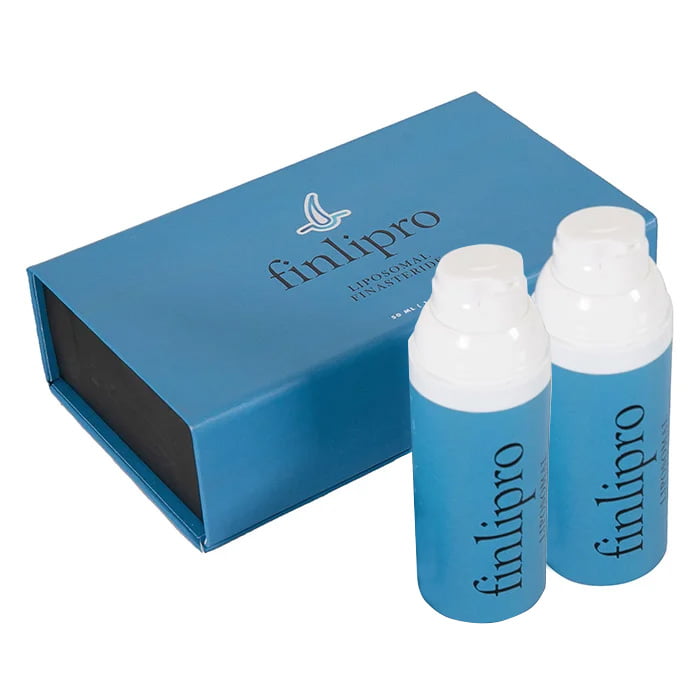
Topical finasteride differs from oral finasteride by delivering the active ingredient directly to the scalp instead of circulating it throughout the entire body. This localized approach aims to reduce scalp DHT levels while limiting systemic exposure, making it an attractive option for people seeking effective hair loss treatment with a potentially lower risk of unwanted side effects.
Hair loss affects millions of men worldwide, and androgenetic alopecia remains the most common cause. As awareness of treatment options grows, many people compare topical finasteride with oral finasteride before choosing a solution. While both treatments target the same hormonal pathway, they differ significantly in how they work, how the body absorbs them, and how patients experience treatment.
Understanding these differences helps patients make informed decisions with their healthcare providers. Factors such as lifestyle, treatment goals, medical history, and personal preferences all influence which option may be more appropriate.

Finasteride belongs to a class of medications known as 5-alpha reductase inhibitors. The enzyme 5-alpha reductase converts testosterone into dihydrotestosterone (DHT), a hormone strongly linked to male pattern baldness.
High levels of scalp DHT gradually shrink susceptible hair follicles. Over time, affected hairs become thinner, shorter, and eventually stop growing altogether. Finasteride helps interrupt this process by lowering DHT production.
Whether applied topically or taken orally, finasteride targets the same biological mechanism. The primary distinction lies in how the medication reaches the hair follicles and how much of it enters the bloodstream.
One of the biggest advantages of topical finasteride is its targeted delivery. Instead of exposing the entire body to the medication, the solution concentrates its action where hair loss occurs.
Localized scalp application offers several potential benefits:
Several clinical studies have demonstrated encouraging outcomes. Research published in peer-reviewed dermatology journals found that topical formulations significantly reduced scalp DHT while producing much smaller decreases in serum DHT than oral finasteride.
This difference may explain why many physicians consider topical formulations for patients who remain concerned about systemic exposure.

Hair follicles require consistent protection from DHT to remain healthy. By concentrating treatment directly on the scalp, topical finasteride allows higher local activity where it matters most.
Healthy follicles continue producing thicker hair shafts when DHT pressure decreases. Many patients notice reduced shedding first, followed by gradual improvements in hair density over several months.
Because hair grows slowly, visible improvement usually requires patience. Dermatologists often recommend evaluating treatment results after six to twelve months of consistent use.
Oral finasteride has served as one of the most extensively studied hair loss medications for decades. After swallowing the tablet, the digestive system absorbs the medication into the bloodstream.
Once circulating throughout the body, finasteride inhibits 5-alpha reductase in multiple tissues, including the scalp, prostate, and skin.
This systemic distribution creates several advantages:
However, systemic exposure also explains why some patients express concern about unwanted effects involving libido, sexual function, or hormonal balance. Although these side effects occur in a relatively small percentage of users, they remain an important part of treatment discussions.
Important: Every patient responds differently. Individual tolerance varies considerably, and treatment decisions should always involve qualified medical guidance.
Liposomal finasteride represents an advanced topical delivery system designed to improve medication penetration while minimizing unnecessary absorption into the bloodstream.
Liposomes are microscopic spherical structures composed of phospholipid layers that closely resemble natural cell membranes. These tiny carriers transport active ingredients more efficiently across the skin barrier.
Instead of allowing medication to remain on the scalp surface, liposomal technology encourages gradual release into deeper skin layers where hair follicles reside.
Potential advantages include:
Researchers continue investigating liposomal formulations because they may optimize the balance between effectiveness and systemic exposure.
Traditional topical solutions sometimes evaporate quickly or remain largely on the skin surface. Liposomal carriers improve contact with hair follicles by protecting the active ingredient during delivery.
This controlled-release mechanism may help maintain therapeutic concentrations around follicles for longer periods, supporting continuous DHT suppression where hair preservation matters most.
| Feature | Topical Finasteride | Oral Finasteride |
|---|---|---|
| Administration | Applied directly to the scalp | Taken by mouth |
| Primary Target | Hair follicles on the scalp | Entire body circulation |
| Systemic Exposure | Generally lower | Higher |
| Serum DHT Reduction | Lower overall reduction | Greater overall reduction |
| Daily Routine | Requires scalp application | Simple daily tablet |
| Suitable For | Patients seeking localized treatment | Patients preferring oral therapy |
Recent studies continue to compare the efficacy of topical and oral finasteride. Several randomized clinical trials report that topical formulations produce meaningful improvements in hair density while limiting reductions in circulating DHT.
Researchers have observed:
Although the evidence supporting topical treatment continues to grow, oral finasteride still has a much longer history of clinical use. Long-term safety data remain more extensive for oral formulations, while topical therapies continue accumulating evidence through ongoing research.
Many dermatologists recommend combination therapy because hair loss involves multiple biological pathways.
Popular combinations include:
Combining therapies may produce greater improvements than relying on a single treatment alone.
Consistency matters more than intensity. Applying topical finasteride exactly as prescribed every day usually delivers better long-term outcomes than irregular use or frequent treatment changes.
Hair follicles require months to complete their growth cycles, so stable treatment often produces the best cosmetic improvement.
Selecting between topical and oral finasteride depends on several personal considerations.
Patients often evaluate:
Some individuals appreciate the convenience of a daily tablet, while others prefer a localized treatment strategy.
The best option is rarely universal. Personalized treatment plans generally achieve better long-term adherence and satisfaction.
Before starting finasteride treatment, remember these important considerations:
Early intervention often preserves more existing hair than waiting until hair loss becomes advanced.
Many patients unintentionally reduce treatment effectiveness through avoidable errors.
Common mistakes include:
Successful hair restoration typically requires patience, consistency, and realistic expectations.
Pharmaceutical research continues improving topical delivery technologies. Scientists are exploring nano-carriers, enhanced liposomal systems, microemulsions, and controlled-release formulations that may further increase follicular targeting while reducing systemic absorption.
Future innovations may offer even more personalized treatment strategies based on individual scalp biology, genetic factors, and hormone sensitivity.
As research advances, patients can expect increasingly sophisticated topical solutions that balance efficacy, convenience, and safety.
Many clinical studies suggest topical finasteride can significantly improve hair density while reducing scalp DHT. Effectiveness varies among individuals, and direct comparisons continue to evolve as more research becomes available.
Because topical finasteride generally results in lower systemic absorption, it may reduce the likelihood of certain systemic side effects. However, no medication is completely free of risk, and individual responses differ.
Most patients begin noticing reduced shedding after three to four months, while visible improvements in hair thickness typically require six to twelve months of consistent use.
Yes. Many dermatologists recommend combining topical finasteride with minoxidil because the two treatments work through different mechanisms and may provide complementary benefits for androgenetic alopecia.
