
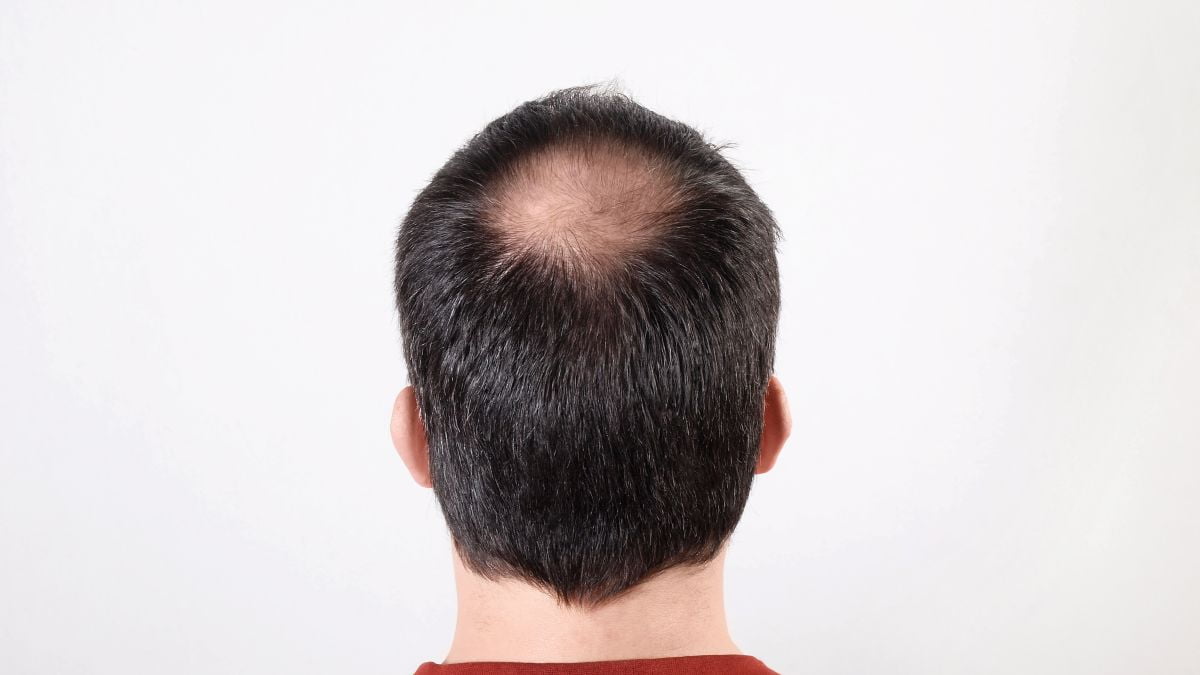
How Finasteride Works for Hair Loss is a question many people ask when they start noticing thinning hair, receding hairlines, or increased shedding. Finasteride is a clinically studied treatment that targets the hormonal cause behind androgenetic alopecia, commonly known as male pattern hair loss. It works by lowering dihydrotestosterone (DHT), a hormone that shrinks hair follicles over time. By reducing DHT levels, finasteride helps slow down hair loss and, in many cases, supports regrowth and thicker hair.
In this article, you will learn exactly how finasteride works in the body, how oral and topical forms differ, what safety considerations matter, and what realistic expectations you should have when using it.

Hair loss in most men and many women follows a predictable biological process called androgenetic alopecia. This condition is strongly influenced by genetics and hormones, especially dihydrotestosterone (DHT).
DHT forms when an enzyme called 5-alpha reductase converts testosterone into a more potent androgen. In genetically sensitive hair follicles, DHT attaches to receptors and gradually shrinks them. This process is known as hair follicle miniaturization.
Over time, the hair becomes:
Eventually, follicles stop producing visible hair.
The scalp areas most affected are typically:
This is why targeting DHT becomes the central strategy in modern hair loss treatment.
Finasteride belongs to a class of medications called 5-alpha reductase inhibitors. Its primary function is to block the conversion of testosterone into DHT.
When DHT levels decrease:
What happens in the body step-by-step:
This process does not happen overnight. Hair cycles take time, so visible improvements usually appear after several months.
When people first start using finasteride, they often expect immediate changes. However, the medication works gradually by changing the environment of the scalp.
During the first 1–3 months:
Between 3–6 months:
After 6–12 months:
After 12+ months:
Consistency matters more than speed. Missing doses frequently can reduce effectiveness.
Finasteride comes in two main forms: oral tablets and topical solutions. Both aim to reduce DHT, but they differ in how they deliver the active ingredient.
Oral finasteride affects the whole body, while topical finasteride focuses more on the scalp.
Key differences explained:
Oral finasteride:
Topical finasteride:
| Feature | Oral Finasteride | Topical Finasteride |
|---|---|---|
| Application | Daily pill | Scalp solution or spray |
| DHT reduction | High (systemic) | Moderate to high (localized) |
| Convenience | Very easy | Requires application routine |
| Side effect risk | Higher systemic exposure | Potentially lower systemic exposure |
| Research depth | Extensive clinical data | Growing but less long-term data |
| Best for | Moderate to advanced hair loss | Early-stage or sensitive users |
Both forms aim to support the same biological goal: reducing scalp DHT levels to protect hair follicles.
Understanding safety is essential before starting finasteride. While many users tolerate it well, it still influences hormonal pathways.
Commonly reported side effects:
Do not self-prescribe without medical guidance. Finasteride is a prescription medication in many countries because it affects hormone metabolism.
Other important considerations:
Month 1–2: Adjustment phase
Month 3–4: Shedding stabilization
Month 5–6: Early visible changes
Month 6–12: Noticeable improvement
After 12 months: Maintenance phase
Hair density improvement varies from person to person, depending on genetics, age, and how early treatment begins.
It may be less effective for:
Common myths
Real side effect profile
Most clinical studies show that side effects occur in a minority of users, but perception varies due to online discussions.
Understanding the difference between perception and clinical data is important when evaluating treatment options.
Lifestyle support:
The biggest mistake is discontinuation before full results appear.
| Topic | Key Insight |
|---|---|
| Mechanism | Blocks DHT production via 5-alpha reductase inhibition |
| Main benefit | Slows or stops genetic hair loss progression |
| Time to work | 3–6 months initial changes, 12 months full results |
| Best candidates | Early to moderate hair loss cases |
| Limitation | Does not revive completely dead follicles |
What is finasteride mainly used for?
Finasteride is primarily used to treat androgenetic alopecia by reducing DHT levels, which slows hair follicle miniaturization and hair loss progression.
How long does it take for finasteride to show results?
Most users notice changes after 3–6 months, but optimal results usually appear after 12 months of consistent use.
Does finasteride regrow hair or only stop hair loss?
It does both to some extent. It mainly stops further loss, but it can also thicken miniaturized hairs and improve density in early stages.
What happens if I stop taking finasteride?
Hair loss typically resumes within several months after stopping, and any gained improvement gradually reverses.
