
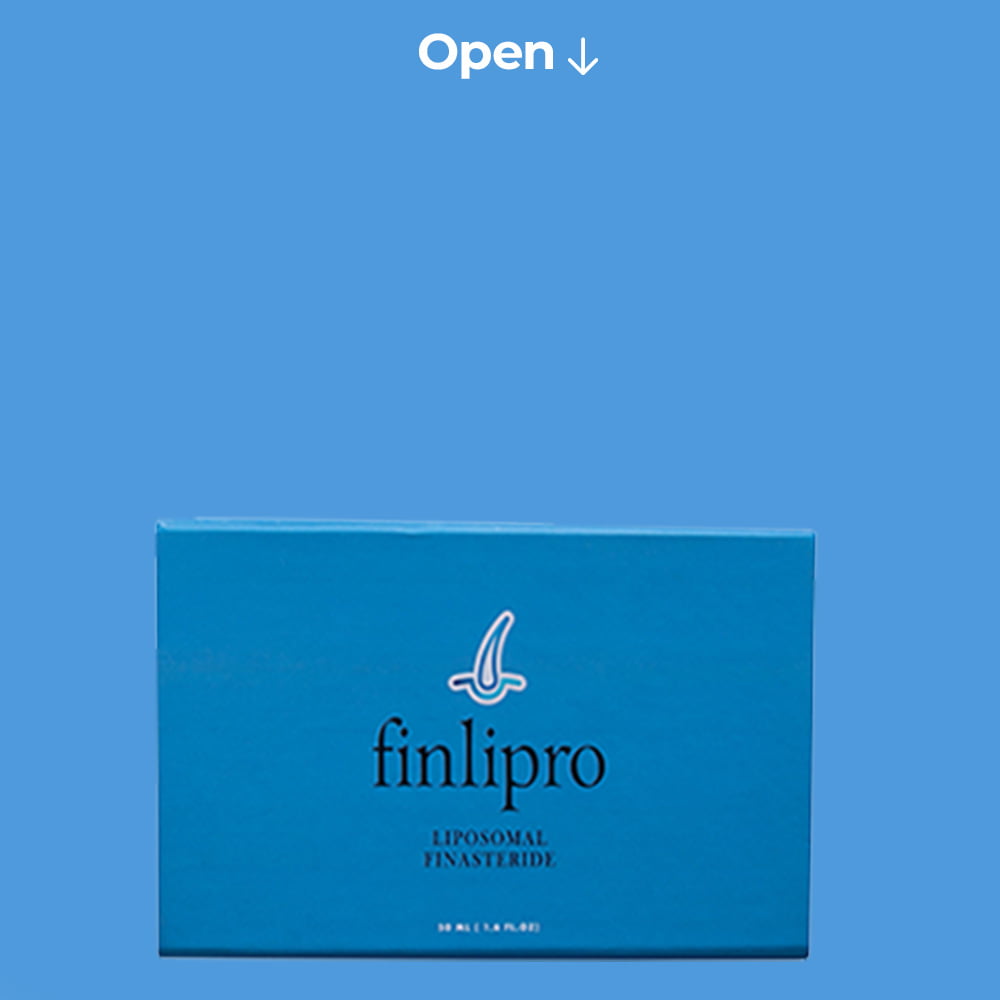
Liposomal Finasteride represents a modern innovation in hair loss treatment that aims to improve drug absorption, reduce side effects, and enhance clinical outcomes. It uses liposome-based nanotechnology to deliver finasteride directly into targeted skin layers, potentially offering a more efficient alternative to traditional oral and topical formulations.
Hair loss, especially androgenetic alopecia, continues to affect millions of men and women worldwide. Standard treatments like oral finasteride have proven effective, but concerns about systemic side effects and variable response rates have driven interest in advanced delivery systems such as liposomal formulations.

Topical finasteride has gained attention as a localized treatment option designed to reduce scalp DHT levels while minimizing systemic exposure. Clinical studies show that topical formulations can significantly reduce hair shedding and improve hair density in many patients.
Research indicates that topical finasteride may reduce scalp DHT by up to 50–70% depending on formulation strength and application consistency. However, systemic absorption still occurs in small amounts, which can sometimes lead to mild hormonal effects.
Clinical observations highlight several important outcomes:
Despite these benefits, variability in absorption remains a challenge. Factors such as scalp condition, formulation base, and patient adherence can significantly influence results.
Dermatologists often combine topical finasteride with minoxidil to enhance follicular stimulation. This combination approach has shown synergistic effects in improving hair density and slowing progression of androgenetic alopecia.

Oral and topical finasteride work through the same biological mechanism—5-alpha reductase inhibition—but their delivery pathways create important differences in effectiveness, safety, and patient experience.
Oral finasteride circulates systemically and blocks DHT production throughout the body. Topical finasteride, on the other hand, targets the scalp more directly and limits systemic exposure.
| Feature | Oral Finasteride | Topical Finasteride | Liposomal Finasteride |
|---|---|---|---|
| Delivery Method | Systemic (oral tablet) | Local scalp application | Nanoparticle-based scalp delivery |
| DHT Reduction | High (systemic) | Moderate to high (localized) | High (targeted + enhanced penetration) |
| Side Effects Risk | Higher systemic risk | Lower systemic exposure | Potentially lowest systemic exposure |
| Absorption Control | Fixed | Variable | Controlled release system |
| Patient Compliance | High (once daily pill) | Moderate (daily application) | Moderate to high |
| Target Precision | Low | Medium | High |
Oral finasteride remains highly effective for many patients, but it may increase the likelihood of systemic side effects such as libido changes or hormonal imbalance. Topical versions reduce this risk but suffer from inconsistent absorption.
Liposomal finasteride aims to bridge this gap by improving penetration into hair follicles while minimizing systemic circulation.
Liposomes are microscopic lipid-based vesicles designed to encapsulate active pharmaceutical ingredients. In hair loss treatment, they function as protective carriers that transport finasteride through the skin barrier more efficiently.
The scalp’s outer layer, the stratum corneum, often limits drug penetration. Liposomes help overcome this barrier by fusing with skin lipids and releasing the active ingredient directly into deeper layers.
Key mechanisms include:
This technology significantly improves bioavailability compared to traditional topical solutions.
Conventional topical solutions often lose potency due to evaporation or poor absorption. Liposomal systems protect the drug until it reaches the follicular unit, increasing treatment efficiency.
Liposomal Finasteride therefore represents a more precise and controlled therapeutic approach in dermatology.
Liposomal drug delivery systems have already been widely used in oncology, antifungal treatments, and vaccine technology. Their application in dermatology and hair restoration is a growing field with promising results.
Clinical advantages include:
Early-stage studies suggest that liposomal formulations may improve hair density outcomes faster than conventional topical solutions, although large-scale long-term trials are still needed.
Dermatology researchers emphasize that nanoparticle-based delivery systems may redefine how androgenetic alopecia is treated in the next decade. The focus is shifting from systemic hormone suppression to localized follicular modulation.
While Liposomal Finasteride is designed to minimize systemic exposure, safety considerations remain essential.
Most reported side effects are mild and localized, including:
Systemic effects appear significantly less frequent compared to oral finasteride, but they cannot be fully excluded.
Patients should avoid overuse, as higher frequency does not improve results
Consistent daily application ensures optimal absorption
Combining multiple active ingredients should be medically supervised
Individuals with sensitive skin may require patch testing
Important Note: Even advanced delivery systems can still influence hormonal pathways if absorbed systemically in significant amounts.
Many users fail to achieve optimal results due to incorrect application or unrealistic expectations. Understanding common mistakes can significantly improve outcomes.
Frequent Errors
Hair growth treatments require patience. Most clinical improvements appear after 3–6 months of consistent use.
Recent dermatological studies show increasing interest in nanotechnology-based hair loss treatments. Liposomal systems are part of a broader shift toward targeted drug delivery.
Research highlights include:
Some pilot studies report up to 20–30% faster visible improvement in hair density compared to non-liposomal topical finasteride, although results vary across populations.
Scientists continue to explore optimized lipid compositions to further enhance penetration and stability.
Not every patient responds the same way to hair loss treatments. However, certain groups may benefit more from advanced delivery systems.
Ideal candidates include:
Dermatologists often recommend starting with topical or oral finasteride and transitioning to advanced formulations if side effects or inefficacy occur.
The future of hair restoration is moving toward precision-based dermatology. Liposomal and nanoparticle systems represent just the beginning of this transformation.
Emerging innovations include:
Liposomal Finasteride plays a key role in this evolution by demonstrating how drug delivery systems can significantly improve therapeutic outcomes without increasing dosage.
Liposomal Finasteride is more effective than oral finasteride?
Liposomal formulations may offer improved targeting and reduced side effects, but oral finasteride still shows strong overall efficacy in clinical practice.
How long does it take to see results?
Most users begin to notice visible improvements within 3 to 6 months of consistent use, depending on individual response.
Does liposomal delivery eliminate side effects completely?
No treatment can guarantee zero side effects. However, liposomal delivery significantly reduces systemic exposure, lowering overall risk.
Can it be combined with minoxidil?
Yes, dermatologists often combine finasteride-based treatments with minoxidil to enhance hair regrowth and follicle stimulation.
