
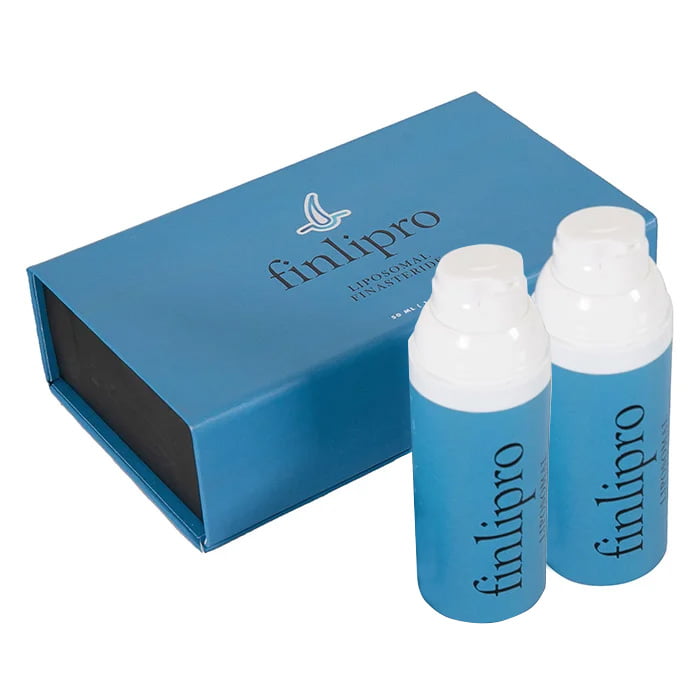
Hair loss affects millions of men and women worldwide, and two of the most discussed solutions today are hair transplant surgery and topical finasteride treatments. If your main goal is improving hair density, both options work differently, deliver different results, and require different commitments. In short, hair transplants provide a permanent, visible density boost through surgical redistribution of follicles, while topical finasteride helps preserve and slightly improve existing hair by blocking DHT locally. The better option depends on your stage of hair loss, expectations, and long-term strategy.

Finasteride is a 5-alpha reductase inhibitor that targets one of the main causes of androgenetic alopecia: dihydrotestosterone (DHT). DHT shrinks hair follicles over time, leading to thinner hair and eventual hair loss. By reducing DHT levels, finasteride helps slow down or even partially reverse this process.
Oral finasteride has been widely studied for decades, but topical versions have gained popularity because they aim to reduce systemic side effects while still acting directly on the scalp. The idea is simple: deliver the active ingredient where it is needed most without heavily affecting the rest of the body.
Finasteride does not create new follicles. Instead, it works by:
Over time, this can lead to visible improvements in density, especially in the crown and mid-scalp regions. However, results depend heavily on consistency and early intervention.
Important Insight: Finasteride is more effective for maintaining hair than restoring advanced bald areas.
Topical finasteride has become a popular alternative for individuals who want localized treatment with potentially fewer systemic effects. Clinical studies show promising results, but outcomes vary depending on formulation strength and application consistency.
Recent research indicates that topical finasteride can reduce scalp DHT levels significantly—sometimes close to oral finasteride—while maintaining lower blood serum exposure. This makes it attractive for users concerned about side effects such as libido changes or hormonal fluctuations.
Studies published in dermatology journals show:
However, researchers also highlight that topical formulations lack standardization. This means results can differ depending on the product quality and concentration.
While promising, topical finasteride has limitations:
Key takeaway: Topical finasteride works best as a long-term maintenance strategy rather than a full restoration solution.
Hair transplant surgery offers a completely different approach. Instead of modifying hormone activity, it physically relocates healthy hair follicles from donor areas (usually the back of the scalp) to thinning or bald regions.
Modern techniques such as FUE (Follicular Unit Extraction) and DHI (Direct Hair Implantation) allow surgeons to create natural-looking density with minimal scarring.
Hair transplants directly increase density by:
Unlike medications, transplanted hair does not depend on hormonal suppression. Once implanted successfully, these follicles continue growing for life.
However, hair transplant surgery also has limitations:
Important Note: A hair transplant does not stop future hair loss in untreated areas. Many patients still require medical therapy afterward.
To better understand which option suits your needs, here is a clear comparison:
| Factor | Hair Transplant | Topical Finasteride |
|---|---|---|
| Main Purpose | Physical restoration | Hormonal control |
| Density Improvement | High (visible grafts) | Moderate (existing hair thickening) |
| Speed of Results | Fast after healing | Slow (3–12 months) |
| Permanence | Long-term/permanent grafts | Requires continuous use |
| Suitability | Advanced hair loss | Early to moderate thinning |
| Maintenance | Minimal after surgery | Daily application required |
| Cost | High upfront cost | Lower ongoing cost |
This comparison shows that both treatments serve different roles rather than competing directly.
The answer depends on your hair loss stage and expectations.
If you are experiencing early thinning, topical finasteride is often more suitable. It helps preserve existing density and slows progression. In many cases, it can stabilize hair loss for years when used consistently.
At this stage, combining treatments often delivers the best results. Many dermatologists recommend:
This combined approach enhances density without surgery.
For significant baldness or receding hairlines, hair transplantation becomes the most effective solution. Medications alone cannot recreate lost follicles, but surgery can restore visible density in targeted areas.
Clinical Insight: Most specialists consider hair transplant the only true restoration method for advanced androgenetic alopecia.
When comparing treatments, cost plays a major role in decision-making.
Over 10 years, the total cost of medication may approach or exceed a surgical procedure depending on brand and formulation.
However, surgery requires upfront affordability, while medication spreads costs over time.
Many people make critical mistakes when choosing between these treatments:
Key Warning: Hair loss treatment success depends heavily on early planning and realistic expectations.
Dermatology specialists often recommend a combined strategy for optimal density outcomes. A hair transplant can rebuild structure, while topical finasteride helps maintain non-transplanted hair.
This dual approach is widely considered the most balanced long-term solution for androgenetic alopecia.
Before deciding between these two options, consider:
These factors significantly influence your success and satisfaction.
Hair restoration technology continues to evolve. Researchers are currently exploring:
These innovations may eventually bridge the gap between medical therapy and surgical restoration.
Choosing between hair transplant vs topical finasteride depends entirely on your goals, hair loss stage, and expectations. If you want structural, permanent density improvement, surgery delivers the strongest results. If you want to maintain and strengthen existing hair, topical finasteride offers a practical long-term solution.
In many real-world cases, the best outcomes come from combining both approaches strategically rather than choosing one over the other.
Topical finasteride can slow or stabilize hair loss in many users, especially in early stages. However, it does not permanently stop genetic hair loss without continued use.
No. A hair transplant only moves resistant follicles. Native hair around transplanted areas can still thin over time without medical support.
Yes. Many surgeons recommend combining both for long-term density preservation and better overall results.
Most users notice reduced shedding within 3–4 months, with visible density improvements typically appearing after 6–12 months.
